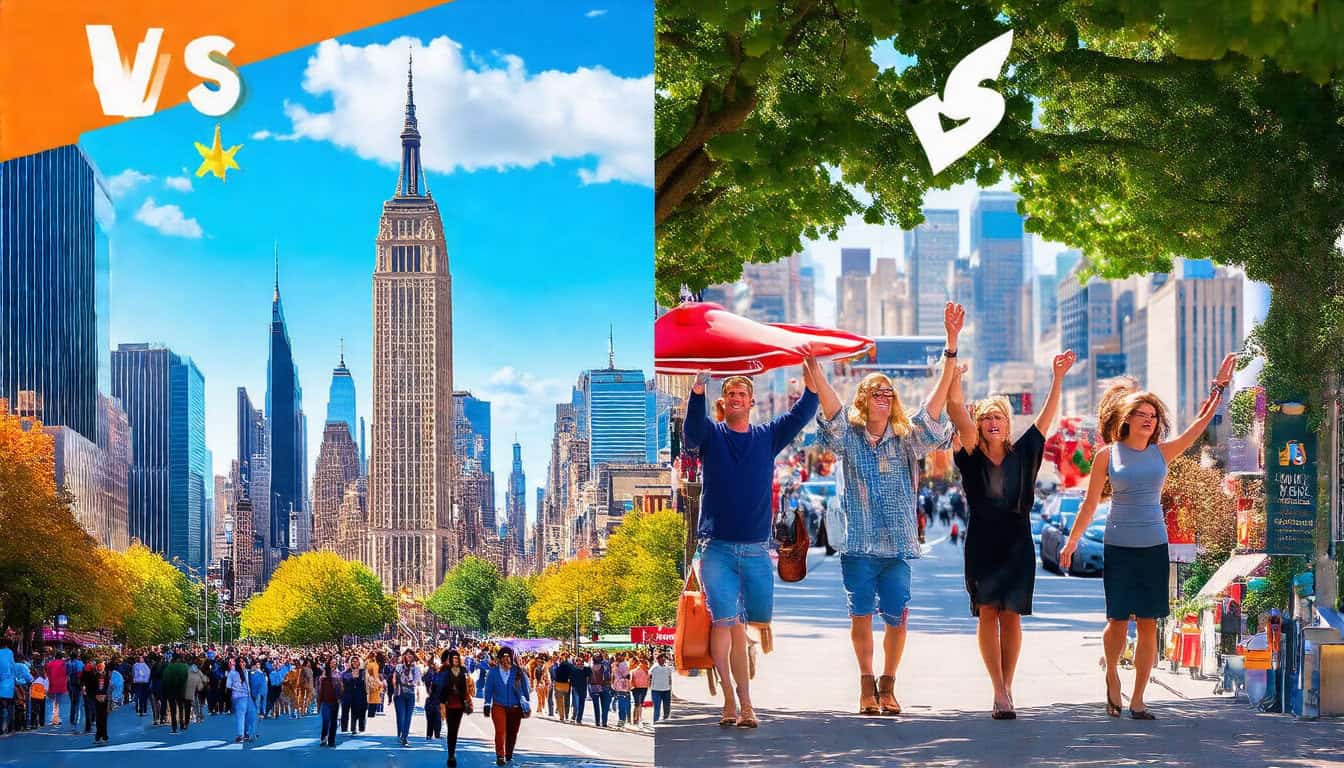
When people think about quality of life, many imagine it differently. Some picture endless job opportunities, fast-paced living, and a vast variety of cultural experiences. Others see quiet streets, strong social support systems, and easy access to healthcare and education as the building blocks of happiness. The debate over whether life is better in the United States or Europe has existed for decades. Each side has its admirers and critics, and the truth lies in examining what each offers and how that matches personal values.
This discussion often starts with common perceptions. Americans may dream about visiting European capitals like Paris, Rome, or London. They might romanticize centuries-old architecture, cafe culture, or historic art. Many save up their money for that perfect European vacation, the kind of trip that feels rich in history and charm. Yet, Europeans tend to view the US differently. Many find American food unhealthy and argue that suburban life lacks character, sometimes calling it monotonous or ugly. Furthermore, some Europeans say that American culture does not feel unique enough. Despite this, large numbers of Europeans have moved to the United States over the years. Data shows that more Europeans have chosen to relocate to the US than Americans moving to Europe every single year. This raises questions about what draws people across the Atlantic in search of a better life.
Understanding quality of life requires defining it first. It is broad and depends on individual preferences. Generally, quality of life measures include health, economic well-being, education, environment, social connections, and overall happiness and satisfaction. Both objective factors like income levels or healthcare availability and subjective feelings like happiness or belonging contribute to this assessment.
Looking at Europe presents a diverse picture because it consists of numerous countries. They differ in language, governance, and traditions. However, many EU nations share common policies, especially in welfare and public services. These shared elements help create a relatively uniform baseline for comparison with the US.
Healthcare stands out as a key factor. Most European countries provide universal healthcare coverage. This means residents receive medical care without facing significant financial hardship. Taxes often fund this system, building a safety net that reaches everyone, from children to seniors. In contrast, the US does not have universal healthcare. Many rely on private insurance linked to their jobs. Others may be uninsured or underinsured. Although the US health sector boasts cutting-edge medical technology and world-class research, its healthcare outcomes lag behind many European countries. Life expectancy and infant mortality rates highlight this difference. Preventative care and public health initiatives in Europe contribute to better overall health, while gaps in access in the US create disparities.
Education also plays a major role. European countries like Finland, Germany, and the Netherlands often rank high in global education systems. They spend a significant part of their national budget on education, which results in well-funded schools and access to quality instruction. In Europe, higher education tends to be affordable or even tuition-free in many places, making it more accessible. The United States has prestigious universities as well, including the Ivy League schools, but education quality varies widely. Additionally, the cost of college can be a significant barrier for many students, leading to heavy debts or limited access for some.
Social environment differs between the two regions too. European cities often focus on walkability, green spaces, and public transportation. The design of neighborhoods encourages social interaction and leisure outside the home. Culture in Europe includes strong community traditions and social programs that provide support in times of need. Meanwhile, American suburbs can feel more spread out and car-dependent, which some find isolating. However, the US offers a rich variety of cultural experiences, driven by its diversity and entrepreneurial spirit.
The environment also shapes quality of life. Europe tends to have strict regulations on pollution and sustainability efforts aimed at reducing carbon emissions and protecting natural spaces. This commitment often leads to cleaner air and water, as well as preserved countryside. The US has impressive national parks and wild areas but faces challenges managing pollution effectively in some regions and balancing growth with conservation.
Economic factors matter, but they are complicated. The US economy is dynamic and offers many opportunities for career advancement. Average incomes can be higher, and Americans often enjoy more consumer choices. However, economic inequality is more pronounced, and safety nets like unemployment benefits or healthcare support can be patchy. European countries typically offer stronger social welfare systems designed to reduce poverty and help those in need, but this sometimes comes with higher taxes.
Social connections and community also influence happiness. Europeans generally spend a good deal of time with family and friends and benefit from social policies that encourage work-life balance, like longer vacations and parental leave. Americans often work longer hours and have less paid time off, which may reduce time for relationships and leisure.
Media and information also affect well-being. Staying informed in a world full of fast news cycles and sensational headlines can be exhausting everywhere, but having balanced coverage and trustworthy sources is vital for understanding the world. For people who want to see all sides of a story, comprehensive news platforms are available that gather various viewpoints and help readers form their own opinions.
One person’s experience living in Europe highlights many of these points. After moving from the US, they noticed differences in daily life, from better healthcare access and affordable education to more relaxed cities and social interactions. These changes affected their quality of life positively in many ways.
In summary, neither place is flawless. The US excels in innovation, opportunities, and cultural variety, but struggles with high healthcare costs, income inequality, and less social safety. Europe offers universal healthcare, stronger education systems, and supportive social policies, but sometimes limits economic dynamism and choice.
Where happiness flourishes depends on what a person values most. Those who prioritize financial freedom, career growth, and innovation might find the US appealing. Others who seek security, affordable healthcare, and community may prefer Europe. Both have unique strengths and challenges, making quality of life a personal journey shaped by individual preferences and priorities.
#portugaltravelguide #traveltipstoportugal #bestplacestovisitinportugal #bestthingstodoinportugal #exploreportugal #portugalvacationideas #portugaltraveltips #portugaltravelnews #packingforportugaltrip #customstipsforportugaltravel #luggagetipsforportugal #besthotelsinlisbon #bestplacestostayinlisbon #bestrestaurantsinlisbon #bestthingstoseeinlisbon #belemtraveltips #lisbontravelguide #bestplacestostayinalgarve #algarvetravelguide #bestrestaurantsinalgarve #thingstoseeinalgarve #packingforalgarve #besthotelsinporto #bestplacestostayinporto #bestrestaurantsinporto #portotraveltips #besthotelsincoimbra #bestplacestostayincoimbra #bestrestaurantsincoimbra #coimbratravelguide #besthotelsinsintra #bestplacestostayinsintra #bestrestaurantsinsintra #sintratravelguide #besthotelsinlagosportugal #bestplacestostayinlagosportugal #bestrestaurantsinlagosportugal #lagostravelguide #besthotelsinmadeira #bestplacestostayinmadeira #bestrestaurantsinmadeira #madeiratravelguide #besthotelsintheazores #bestplacestostayintheazores #bestrestaurantsintheazores #azorestravelguide #bestbeachesinportugal #bestluggageforportugaltravel #bestcarryonluggageforportugal #bestbackpackforportugaltravel #besttravelsuitcaseforportugal #besttraveladapterforportugal #bestpackingcubesforportugal #portugalpackingguide #carryonpackingforportugal #travellighttoportugal #travelgearforportugal #travelessentialsforportugal #travelsmarttoportugal #travelsafelyinportugal #portugaltravelchecklist #travelcustomsportugal #travelcultureportugal #learnportuguesephrases #portugallanguageguide #travellikealocalportugal #localetiquetteportugal #besthotelsinaveiro #bestplacestostayinaveiro #bestrestaurantsinaveiro #aveirotravelguide #besthotelsinevora #bestplacestostayinevora #bestrestaurantsinevora #evoratravelguide #besthotelsinguimaraes #bestplacestostayinguimaraes #bestrestaurantsinguimaraes #guimaraestravelguide #besthotelsinobidos #bestplacestostayinobidos #bestrestaurantsinobidos #obidostravelguide #wanderlustportugal #portugalroadtripideas #portugalbeachtips #traveltolisbonportugal #travelportoportugal #travelalgarveportugal #travelmadeiraportugal