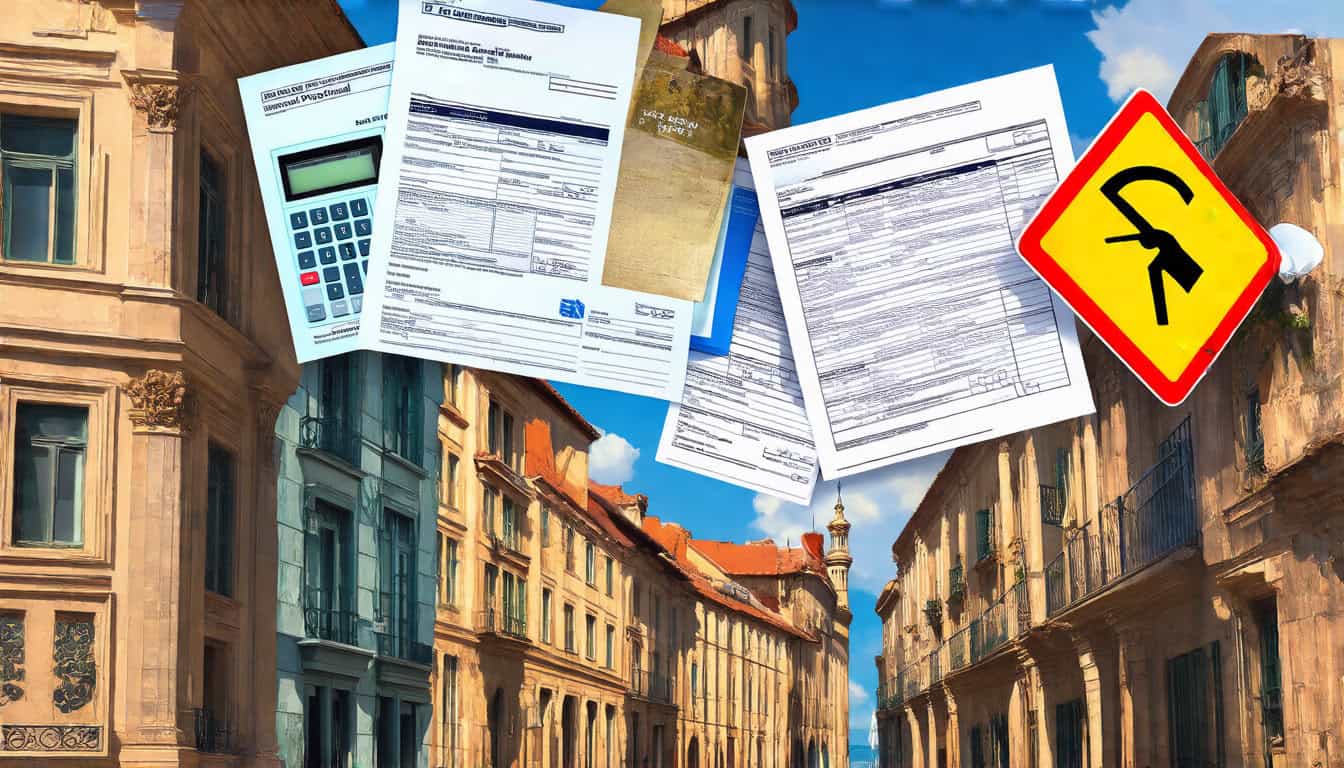
Filing taxes in Portugal can feel complicated, especially with new tax laws introduced in 2023. Changes like the cancellation of the Non-Habitual Resident (NHR) regime and new rules on cryptocurrency and investments make this tax year tricky for many. For Americans living in Portugal, tax filing can be even more challenging due to international treaties. This article highlights the 14 most common tax filing mistakes people make in Portugal. Awareness of these errors can help avoid costly penalties and other serious consequences.
- Becoming a Portuguese Tax Resident by Accident
Some people become tax residents in Portugal without meaning to. This often happens when someone changes the address linked to their tax identification number (NIF). Portugal sees this as a sign that the person now lives in the country and thus as a tax resident from that moment onward. This status requires filing Portuguese tax returns for the period after becoming a resident.
Another way people accidentally become tax residents is by owning a home they register as their main residence. Even without changing the taxable address, the law considers owning a primary residence one of the conditions for tax residency in Portugal. Many who buy homes do not realize they have become tax residents with related tax obligations.
- Declaring the Whole Year’s Income Instead of the Partial Period
When filing your first Portuguese tax return as a new resident, you only need to declare income earned from the date you became a tax resident until the end of that calendar year. Some people mistake this and report their income from the entire previous year. For example, if someone changed their NIF address in August 2023, they should report income only from August through December 2023, not the full year.
- Reporting Income That Should Not Be Taxed in Portugal
When people receive bonuses, unpaid salaries, or remuneration related to work done outside Portugal before becoming residents, they often incorrectly report this income in their Portuguese tax return. Depending on tax treaties between Portugal and the other country, the right to tax such income usually belongs to the country where the work was performed. This means the income should not be included in the Portuguese return, even if payment arrives after becoming a resident.
- Failing to Apply for the Non-Habitual Resident (NHR) Regime Properly
Many newcomers in Portugal qualify for the NHR tax status, which offers special income tax benefits. However, simply qualifying is not enough. You must officially apply for the NHR by March 31 of the year following your arrival. Then, during tax filing, you need to claim NHR benefits correctly by filling in the specific annex (Annex L) designed for NHR holders. Failure to do this may cost you valuable tax exemptions.
- Assuming Capital Gains Are Always Exempt Under NHR
A commonly mistaken assumption is that capital gains, such as profits from selling securities, are fully exempt under the NHR regime. This is not entirely true. The exemption applies only if the country where these gains come from has the right to tax them. Often, tax treaties give Portugal the taxing rights, while the source country does not tax these gains. The situation becomes complicated for U.S. citizens, as the United States taxes global income, including capital gains, regardless of residence thanks to its "saving clause." As a result, even if Portugal offers an exemption, U.S. taxpayers must report and pay taxes on such capital gains.
- Ignoring New Rules on Short-Term Capital Gains
Portugal updated its rules in 2023 regarding short-term capital gains, especially from securities trading. Gains from holding securities for less than one year (often called speculative gains) will no longer get the fixed 28% tax rate. Instead, these gains are added to your other income and taxed at your personal progressive rates. This change means high earners can face higher taxes on short-term profits than before. To benefit from the flat 28% rate, one must hold the securities for more than one year.
- Incorrect Handling of Cryptocurrency Conversions
Portugal was known as a tax-friendly place for cryptocurrencies, but 2023 brought new rules. Now, converting cryptocurrencies into fiat currency within 365 days triggers a capital gains tax at 28%. However, converting crypto to stablecoins pegged to fiat money does not produce capital gains immediately. Understanding these distinctions helps prevent misunderstandings and prevents incorrect tax filings.
- Overlooking Partial Year Residency for Global Income Reporting
When becoming a tax resident, global income reporting only applies from the date of residency. Yet many report worldwide income for the entire year, leading to over-reporting and excessive taxation. Careful tracking of residency start dates can ensure accurate income reporting.
- Mixing Past Work Income with Current Tax Residency
Income earned before becoming Portuguese residents generally belongs to the country where the work was done. Reporting this income in Portugal causes double taxation or leads to complicated corrections later. It is crucial to separate income earned before tax residency and declare it accordingly.
- Not Using the Right Annexes during Tax Filing
Portugal’s tax forms include various annexes for different income types and special statuses. NHR holders must complete Annex L to claim benefits. Many miss this detail and end up paying more than necessary or facing delays and questions from tax authorities.
- Misunderstanding the Interaction of International Tax Treaties
Individuals, especially Americans, should make sure their tax declarations align with international tax treaties. These treaties assign taxing rights on types of income between countries. Ignoring these rules can result in paying tax twice or failing to comply with treaty provisions. Working with tax professionals knowledgeable in treaty rules prevents costly errors.
- Assuming Portugal’s Tax Exemptions Apply Automatically
Some taxpayers wrongly think tax exemptions under new laws or special statuses apply automatically. However, these often require explicit claims and proper documentation in the tax return. For example, NHR benefits must be claimed with the correct annex, and crypto gains require careful classification. Failing to act can lead to missed opportunities or penalties.
- Reporting Crypto Gains Incorrectly or Late
Given the new regulations on cryptocurrency, taxpayers need to accurately determine holding periods and conversion dates. Reporting crypto gains as regular income when the flat rate applies or vice versa leads to tax mismatches. Also, late reporting or failure to report crypto transactions risks penalties. Keeping clear records and understanding the classifications minimises mistakes.
- Ignoring Consultation with Qualified Tax Experts
Because of the complexity introduced by recent changes, especially for foreign nationals, simple self-filing can increase the chances of errors. Seeking help from a tax firm familiar with international and Portuguese tax law protects taxpayers from costly mistakes. Competent experts understand treaty effects and new legal nuances, helping optimize tax position while ensuring compliance.
Final Thoughts
Filing taxes in Portugal involves multiple rules that have changed recently. Unintended tax residency, incorrect income reporting periods, misunderstanding NHR benefits, and new treatment of capital gains and cryptocurrencies top the list of frequent filing mistakes. These errors can lead to unexpected tax bills or even legal trouble. If you live or plan to live in Portugal, awareness of these common pitfalls helps you act carefully and file accurately. If your tax situation includes foreign income, cryptocurrencies, or investments, working with professionals who understand both Portuguese and international tax systems is wise. With the right approach, you can navigate Portugal’s tax system smoothly and avoid costly errors.
#portugaltravelguide #traveltipstoportugal #bestplacestovisitinportugal #bestthingstodoinportugal #exploreportugal #portugalvacationideas #portugaltraveltips #portugaltravelnews #packingforportugaltrip #customstipsforportugaltravel #luggagetipsforportugal #besthotelsinlisbon #bestplacestostayinlisbon #bestrestaurantsinlisbon #bestthingstoseeinlisbon #belemtraveltips #lisbontravelguide #bestplacestostayinalgarve #algarvetravelguide #bestrestaurantsinalgarve #thingstoseeinalgarve #packingforalgarve #besthotelsinporto #bestplacestostayinporto #bestrestaurantsinporto #portotraveltips #besthotelsincoimbra #bestplacestostayincoimbra #bestrestaurantsincoimbra #coimbratravelguide #besthotelsinsintra #bestplacestostayinsintra #bestrestaurantsinsintra #sintratravelguide #besthotelsinlagosportugal #bestplacestostayinlagosportugal #bestrestaurantsinlagosportugal #lagostravelguide #besthotelsinmadeira #bestplacestostayinmadeira #bestrestaurantsinmadeira #madeiratravelguide #besthotelsintheazores #bestplacestostayintheazores #bestrestaurantsintheazores #azorestravelguide #bestbeachesinportugal #bestluggageforportugaltravel #bestcarryonluggageforportugal #bestbackpackforportugaltravel #besttravelsuitcaseforportugal #besttraveladapterforportugal #bestpackingcubesforportugal #portugalpackingguide #carryonpackingforportugal #travellighttoportugal #travelgearforportugal #travelessentialsforportugal #travelsmarttoportugal #travelsafelyinportugal #portugaltravelchecklist #travelcustomsportugal #travelcultureportugal #learnportuguesephrases #portugallanguageguide #travellikealocalportugal #localetiquetteportugal #besthotelsinaveiro #bestplacestostayinaveiro #bestrestaurantsinaveiro #aveirotravelguide #besthotelsinevora #bestplacestostayinevora #bestrestaurantsinevora #evoratravelguide #besthotelsinguimaraes #bestplacestostayinguimaraes #bestrestaurantsinguimaraes #guimaraestravelguide #besthotelsinobidos #bestplacestostayinobidos #bestrestaurantsinobidos #obidostravelguide #wanderlustportugal #portugalroadtripideas #portugalbeachtips #traveltolisbonportugal #travelportoportugal #travelalgarveportugal #travelmadeiraportugal