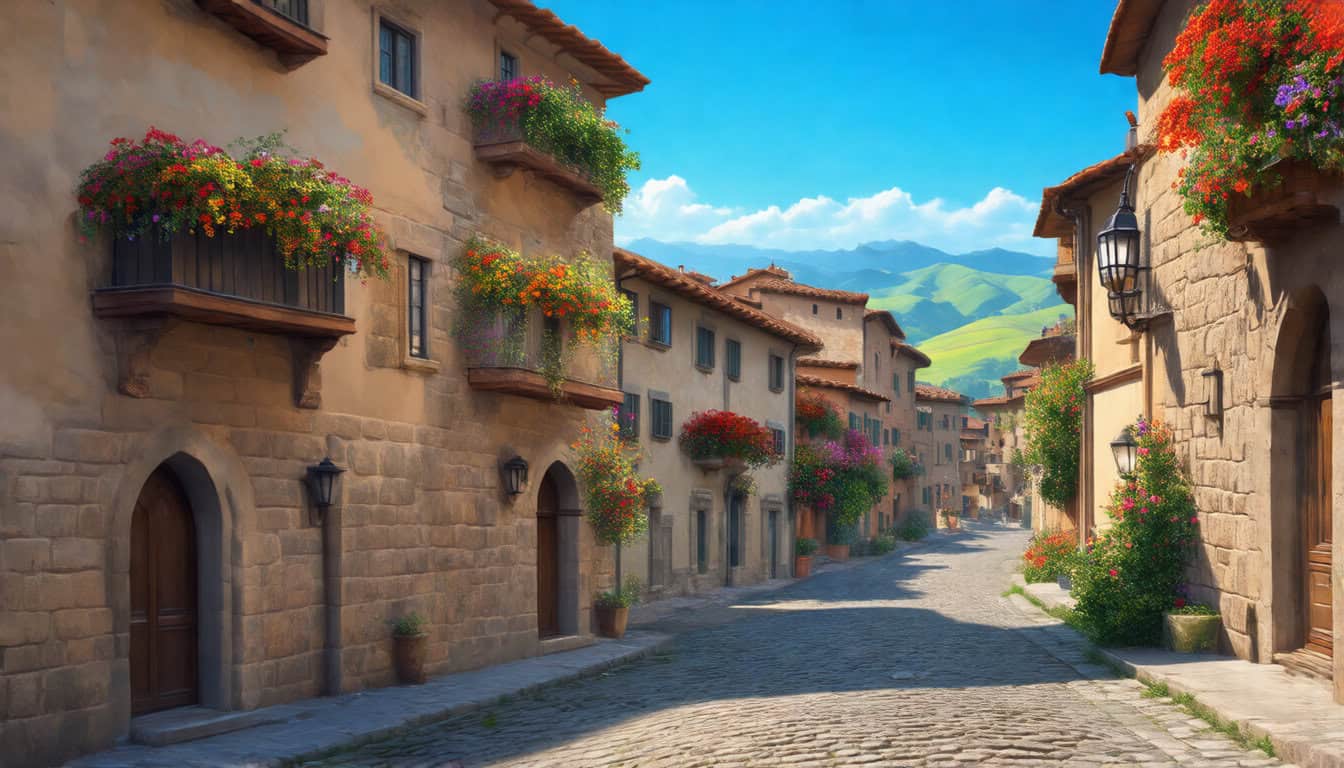
Nestled just thirty minutes from Madrid lies Alcalá de Henares, a town rich with history and flavor. Many people travel to Spain knowing only its famous cities, yet Alcalá offers a rewarding retreat with roots that reach deep into medieval times. Its streets, legends, and culinary delights together reveal a vibrant character worth exploring.
Alcalá’s past reaches as far back as Roman times. In the Middle Ages, it flourished as a center of learning and culture. The town’s university, founded in 1499, ranks among the world’s oldest and holds a place of honor in Spain. This institution witnessed many moments significant to Spanish and global history. One remarkable figure linked to Alcalá is Christopher Columbus. In 1486, Columbus visited a building in the town to ask Queen Isabella of Spain for funds to undertake his historic voyage, a journey that changed the course of history.
This very building is also tied to another historical figure, Catherine of Aragon. She was born here and later became the first wife of Henry VIII of England. Her marriage and subsequent divorce precipitated England’s break from the Catholic Church. Such associations mark Alcalá as a town of political and cultural crossroads.
Many of Alcalá’s streets preserve the atmosphere of past centuries. The Calle Mayor, or Main Street, dates back to the 12th century. It once lay within the old Jewish quarter and follows the path of an ancient Roman road, the Calle Mayor still pulses with lively commerce yet retains a medieval charm. Some of the buildings along this street feature original 15th-century columns, standing resiliently through centuries.
The university itself is a showcase of history and art. Its halls were once filled with students defending their theses in Latin. Today, the university hosts a prestigious literature prize that recognizes excellence in the Spanish-speaking world. Visitors can admire stunning wood-crafted ceilings dating to the 16th century, each detail revealing the artistry and craftsmanship of earlier eras.
One of the university’s founders, Cardinal Cisneros, was a stern and deeply religious man. Living austerely, he wielded strong influence over Spain’s religious policies. Under his guidance, Queen Isabella issued the Alhambra Decree, which ordered the expulsion of Jews from Spain. He also drove conversions of Muslim Spaniards, contributing to significant cultural changes and conflicts that shaped Spanish history.
Alcalá also boasts a literary heritage. It was the birthplace of Miguel de Cervantes, the author of Don Quixote and often considered the father of the modern novel. Although the house where Cervantes was born fell into disrepair, a faithful reconstruction offers insight into the lifestyle of a middle-class Castilian family in the 1500s. The home features a Roman and Moorish inherited central courtyard, alongside period furniture and cultural artifacts that paint a vivid picture of the time.
Records from Cervantes’s baptism survived Spanish Civil War dangers thanks to a local priest who entrusted them to a villager. The villager hid these precious documents in a well, ensuring that later generations would know this important piece of history.
The daily life of Cervantes’s family also emerges from the house’s details. His father, a physician, would use a rather unsettling chair for bloodletting, a common but flawed medical practice of the time. Women of the household would sit on cushions and rugs, revealing the Moorish influence on the region’s culture and living habits. Even toilets were present, a hint at the blend of comfort and modesty in medieval Castilian homes.
After soaking in the town’s history, one naturally turns to its food – an essential part of Alcalá’s charm. The town may not be Spain’s most famous food center, but it has a lively and appealing tapa culture. At many bars, ordering a drink includes receiving a free tapa, a tradition that invites easy, relaxed dining with friends and neighbors.
One particular bar, El Lindo, thrives with locals even on an ordinary Thursday afternoon. With the atmosphere buzzing, patrons enjoy hearty and simple favorites like patatas bravas – fried potato chunks topped with fried eggs – alongside creative tapas such as baby eels, known locally as gulas. These are a cost-friendly stand-in for the pricier true baby eels but offer a similarly satisfying flavor, especially when paired with a perfectly cooked egg.
Walking into the bar, one orders a drink at the bar and chooses from a variety of small bites. Squid, chorizo, pork loin, and garlic-flavored salmon top the list of popular choices. The beauty of this system lies in trying many small dishes rather than one large meal. The pace of eating encourages conversation and enjoyment of each flavor, bringing people together over simple pleasures.
This tradition fits perfectly with Alcalá’s student town vibe. With a population near 200,000, it combines youthful energy with a deep respect for its layered past. Students from all over Spain and beyond gather here to study and explore, adding freshness to ancient streets.
Alcalá’s unique mix of history, literature, architecture, and cuisine invites visitors to tread its cobblestones and pause at its tapas bars. The town feels like a step back in time but also pulses with life and discovery. It offers a different type of Spanish experience, one that unites the past and present in an inviting embrace.
For anyone visiting Madrid, a quick trip to Alcalá de Henares enriches the journey. The town’s blend of medieval heritage and warm hospitality perfectly captures the enduring allure of Spain’s smaller cities. Here, history is not locked away but shared, tasted, and lived with every passing moment.
#spaintravelguide #traveltipstospain #bestplacestovisitinspain #bestthingstodoinspain #explorespain #spainvacationideas #spaintraveltips #spaintravelnews #packingforspaintrip #customstipsforspaintravel #luggagetipsforspain #besthotelsinbarcelona #bestplacestostayinbarcelona #bestrestaurantsinbarcelona #bestthingstoseeinbarcelona #sagradafamiliatravelguide #barcelonatraveltips #bestplacestostayincostabrava #costabravatravelguide #bestrestaurantsincostabrava #thingstoseeincostabrava #packingforcostabrava #besthotelsinmadrid #bestplacestostayinmadrid #bestrestaurantsinmadrid #madridtraveltips #besthotelsinseville #bestplacestostayinseville #bestrestaurantsinseville #sevilletravelguide #besthotelsinvalencia #bestplacestostayinvalencia #bestrestaurantsinvalencia #valenciatravelguide #besthotelsingranada #bestplacestostayingranada #bestrestaurantsingranada #alhambratraveltips #besthotelsinmallorca #bestplacestostayinmallorca #bestrestaurantsinmallorca #mallorcabeachesguide #besthotelsinibiza #bestplacestostayinibiza #bestrestaurantsinibiza #ibizatravelguide #besthotelsincanaryislands #bestplacestostayincanaryislands #bestrestaurantsincanaryislands #canaryislandstravelguide #bestbeachesinspain #bestluggageforspaintravel #bestcarryonluggageforspain #bestbackpackforspaintravel #besttravelsuitcaseforspain #besttraveladapterforspain #bestpackingcubesforspain #spainpackingguide #carryonpackingforspain #travellighttospain #travelgearforspain #travelessentialsforspain #travelsmarttospain #travelsafelyinspain #spaintravelchecklist #travelcustomsspain #travelculturespain #learnspanishphrases #spainlanguageguide #travellikealocalspain #localetiquettespain #besthotelsincordoba #bestplacestostayincordoba #bestrestaurantsincordoba #cordobatraveltips #besthotelsinbilbao #bestplacestostayinbilbao #bestrestaurantsinbilbao #bilbaotravelguide #besthotelsinsansebastian #bestplacestostayinsansebastian #bestrestaurantsinsansebastian #sansebastiantraveltips #wanderlustspain #spainroadtripideas #spainbeachtips #traveltobarcelonaspain #travelmadridspain #travelsevillespain #travelmallorcaspain