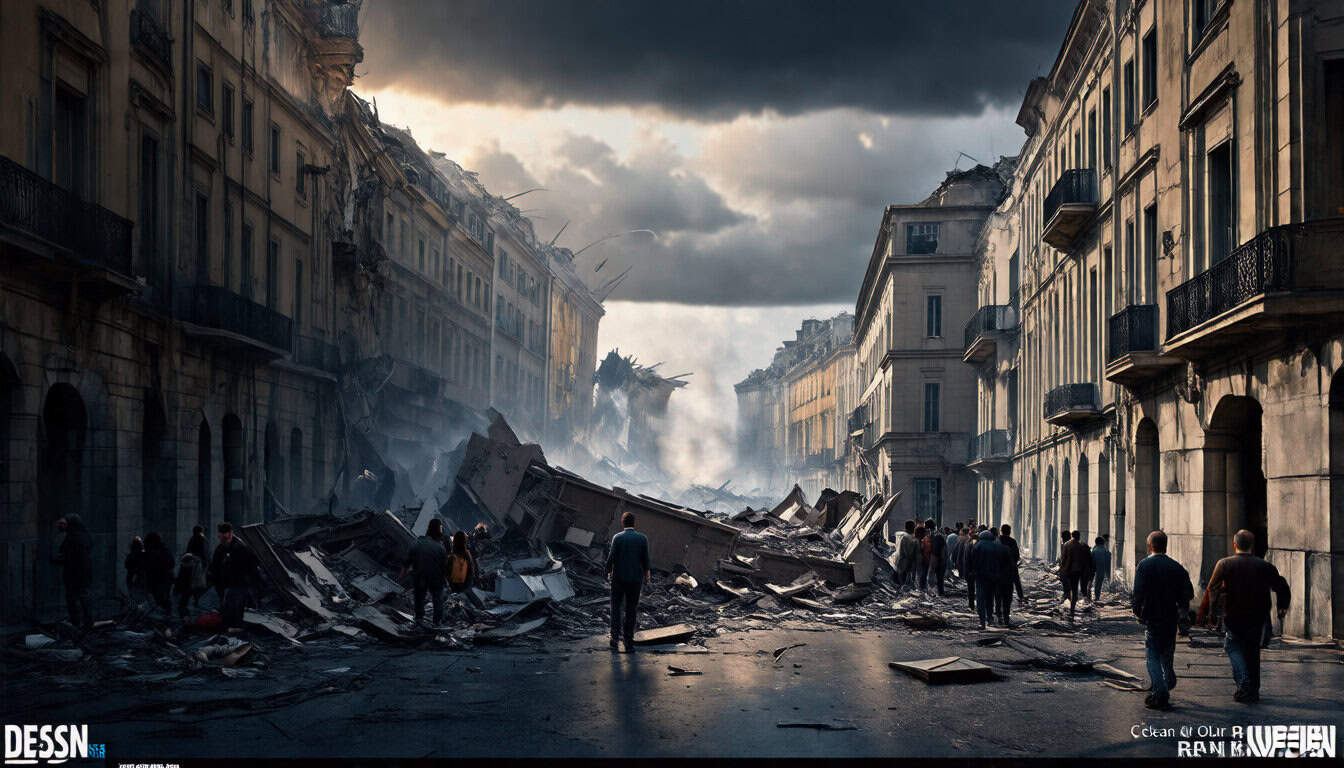
At 5:11 a.m. one recent morning, the ground beneath Lisbon began to shake. The tremor roused many residents from their sleep. Beds moved, house floors vibrated, and dogs ran barking around neighborhoods. That earthquake, measured at magnitude 5.4, stood out as the strongest felt in Portugal’s capital in a decade. For a local who grew up on the U.S. West Coast where earthquakes are common, this tremor still felt unusually powerful. Online communities quickly filled with posts describing the experience. Even though Portugal frequently feels seismic activity due to its geologic position, this event captured attention because of its intensity and timing.
Portugal’s location sits amidst a busy fault zone. Offshore to the south, the Eurasian and Nubian tectonic plates meet and shift. Movements along this boundary create most of the earthquakes recorded in the country. Yet faults within the mainland itself also carry potential for damage. This complex system means seismic risks remain part of daily life. Yet rarely do tremors reach destructive force like the one that pummeled Lisbon centuries ago.
The memory of Lisbon’s great quake remains etched in historical records and city legends. In 1755, the capital suffered one of its worst natural disasters ever. The magnitude of that event likely measured at 8.5 or higher on the Richter scale. But numbers alone do not capture the horror. What made that morning tragic was the timing. It occurred on All Saints Day, a Christian holiday when many residents gathered in churches to honor saints. Suddenly, roofs crashed down, and walls cracked open. Open flames from candles ignited fires that quickly raged out of control, consuming entire blocks.
After the initial destruction, survivors rushed toward the harbor. They watched as the sea seemed to pull back, exposing shipwrecks and debris on the exposed seabed. Then, about 40 minutes later, the water surged back as a tsunami. Powerful waves flooded the harbor and swept across neighborhoods beside the Tagus River. People on horseback fled to higher ground to escape the rising waters. The damage was not limited to Lisbon alone. Other southern cities across Portugal saw extensive wreckage. Even parts of Spain felt the quake’s impact. The tsunami struck coastlines as far as the Andalusian shore, damaging the city of Cádiz. Islands like Madeira also suffered heavy losses.
Shocks from the 1755 quake traveled far and wide. Reports mention sensations as distant as Finland and North Africa. Some sources even suggest Greenland and the Caribbean detected the tremors. Modern research points to wave impacts reaching as far as Brazil, then a Portuguese colony. Letters sent from officials there described damage caused by massive waves triggered by the tsunami. The scale of destruction was overwhelming. Approximately 85 percent of Lisbon’s buildings fell. Palaces, libraries, hospitals, theaters, and museums disappeared. Among the greatest losses were the royal archives containing records of Portugal’s age of exploration. These important historical documents vanished beneath rubble and ash.
Visiting Lisbon today, it is hard not to wonder about what the city looked like before the quake. Had the earthquake not ravaged the area, Lisbon might stand alongside ancient cities like Rome or Athens as a bastion of preserved history. No one can know for sure. The tragedy changed the course of Lisbon’s development.
In the days following the disaster, leadership began planning how to rebuild. One key figure was Sebastião José de Carvalho e Melo, better known as the Marquis of Pombal. He served as the king’s chief minister and took charge of reconstruction efforts. Pombal famously declared, “Now we bury the dead and heal the living.” Within a year, much of central Lisbon had begun to rise from the ruins.
The new city design featured wide streets laid out on a grid, which helped reduce fire risk and improve access for emergency response. Architects incorporated innovations intended to protect buildings from future quakes. The most notable engineering method involved a wooden framework called “caging.” This wooden skeleton embedded within walls gave structures more flexibility during tremors, reducing the chance of collapse. The approach has become a foundation of seismic-resistant construction in Lisbon.
Pombal also ordered a detailed survey of the earthquake’s effects. Sent to every parish, the questionnaire aimed to collect scientific data on the causes and impact of the disaster. This effort is often hailed as one of the earliest steps toward modern seismology. It showed an understanding that earthquakes must be studied in a systematic way rather than seen simply as random misfortune.
Despite these measures, the threat of earthquakes never completely disappeared. In 1969, Lisbon endured another large quake, this time registering 7.8 in magnitude. That event caused less damage than expected. Buildings generally withstood the shaking well, and casualties remained relatively low, with most deaths occurring in neighboring Morocco rather than Portugal. Experts credit Lisbon’s improved construction standards and preparedness programs for limiting destruction.
Still, it remains uncertain when the next big earthquake will strike. Geologists warn that activity will continue along the fault lines that govern the region. No one can predict exactly how soon or how powerful the next event will be. For residents and officials alike, planning and readiness are essential. Understanding past disasters helps prepare for future risks.
Having lived in California, a hotbed for seismic action, I find earthquakes fascinating. Experiencing them, studying their effects, and learning how societies rebuild afterward shows how nature’s power shapes human lives. Lisbon’s story reminds us that while we cannot control earthquakes, we can shape how we respond to them.
The recent 5.4 magnitude shook the city but caused no major damage. It served as a reminder of Lisbon’s geologic setting and the legacy of seismic risk that has shaped its history. It also reinforced the need for vigilance, strong building codes, and emergency plans. In regions prone to earthquakes, preparedness remains the best defense.
The tremor this morning was more than just a sudden shake. It connected Lisbon to centuries of resilience, tragedy, and ingenuity. It reaffirmed that even in the face of nature’s force, communities endure, rebuild, and continue their stories—sometimes stronger than before.
#portugaltravelguide #traveltipstoportugal #bestplacestovisitinportugal #bestthingstodoinportugal #exploreportugal #portugalvacationideas #portugaltraveltips #portugaltravelnews #packingforportugaltrip #customstipsforportugaltravel #luggagetipsforportugal #besthotelsinlisbon #bestplacestostayinlisbon #bestrestaurantsinlisbon #bestthingstoseeinlisbon #belemtraveltips #lisbontravelguide #bestplacestostayinalgarve #algarvetravelguide #bestrestaurantsinalgarve #thingstoseeinalgarve #packingforalgarve #besthotelsinporto #bestplacestostayinporto #bestrestaurantsinporto #portotraveltips #besthotelsincoimbra #bestplacestostayincoimbra #bestrestaurantsincoimbra #coimbratravelguide #besthotelsinsintra #bestplacestostayinsintra #bestrestaurantsinsintra #sintratravelguide #besthotelsinlagosportugal #bestplacestostayinlagosportugal #bestrestaurantsinlagosportugal #lagostravelguide #besthotelsinmadeira #bestplacestostayinmadeira #bestrestaurantsinmadeira #madeiratravelguide #besthotelsintheazores #bestplacestostayintheazores #bestrestaurantsintheazores #azorestravelguide #bestbeachesinportugal #bestluggageforportugaltravel #bestcarryonluggageforportugal #bestbackpackforportugaltravel #besttravelsuitcaseforportugal #besttraveladapterforportugal #bestpackingcubesforportugal #portugalpackingguide #carryonpackingforportugal #travellighttoportugal #travelgearforportugal #travelessentialsforportugal #travelsmarttoportugal #travelsafelyinportugal #portugaltravelchecklist #travelcustomsportugal #travelcultureportugal #learnportuguesephrases #portugallanguageguide #travellikealocalportugal #localetiquetteportugal #besthotelsinaveiro #bestplacestostayinaveiro #bestrestaurantsinaveiro #aveirotravelguide #besthotelsinevora #bestplacestostayinevora #bestrestaurantsinevora #evoratravelguide #besthotelsinguimaraes #bestplacestostayinguimaraes #bestrestaurantsinguimaraes #guimaraestravelguide #besthotelsinobidos #bestplacestostayinobidos #bestrestaurantsinobidos #obidostravelguide #wanderlustportugal #portugalroadtripideas #portugalbeachtips #traveltolisbonportugal #travelportoportugal #travelalgarveportugal #travelmadeiraportugal