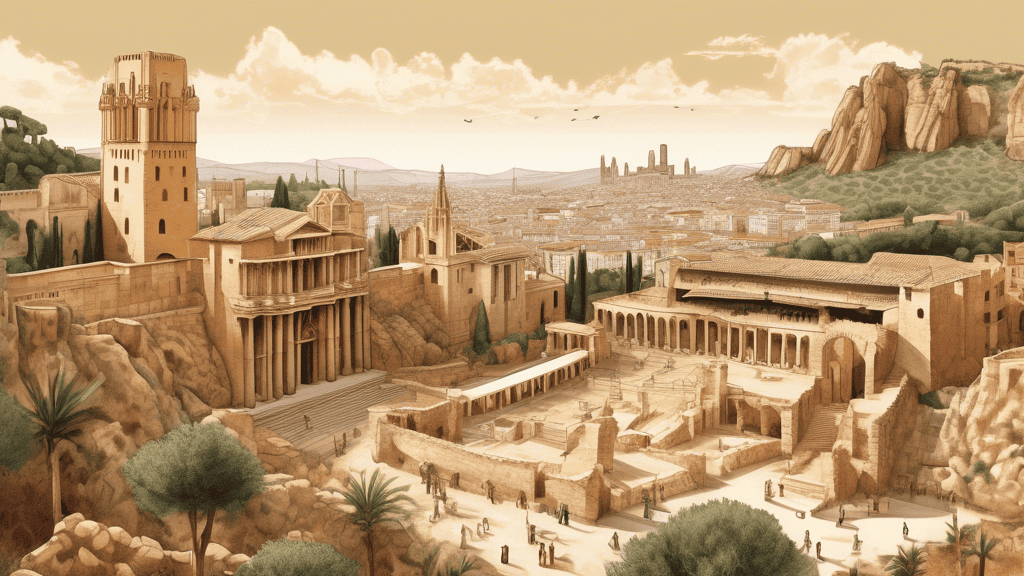
Spain, a country teeming with historical intrigue and cultural richness, is a treasure trove for archaeology enthusiasts. This sun-drenched land, where Romans, Moors, Visigoths, and other civilizations once flourished, offers a vivid tapestry of the past that is waiting to be explored. Archaeology plays a crucial role in unraveling the complex history of Spain, revealing stories etched in ancient stones and prehistoric caves.
Among Spain’s most awe-inspiring archaeological sites is the Altamira Cave in Cantabria, renowned for its stunning prehistoric cave paintings that offer a window into Paleolithic art. The Roman Aqueducts of Segovia stand as a testament to the architectural prowess of ancient Rome, impeccably preserved and still dominating the landscape of modern-day Segovia. The Alhambra in Granada, a magnificent Moorish palace-fortress, enchants visitors with its intricate architecture and profound cultural impact. Atapuerca in Burgos, where ancient human fossils and tools were unearthed, has profoundly influenced our understanding of human prehistory.
Beyond these famous landmarks, Spain also boasts lesser-known archaeological gems. Empúries in Catalonia, with its Greco-Roman ruins, offers a fascinating glimpse into ancient trade and urban life. Meanwhile, Medina Azahara in Cordoba, the ruins of a medieval Islamic city, reveals much about Islamic architecture and urban planning.
For prospective visitors, timing is essential: spring and fall are often ideal for exploring these historical wonders. Tourists should consider guided tours to enrich their experience and take advantage of nearby attractions and amenities for a well-rounded visit.
In conclusion, Spain’s archaeological sites are a testament to its varied and profound history. Exploring these locations is not only a journey through time but also an opportunity for educational and cultural enrichment. Archaeology continues to illuminate Spain’s past, ensuring its stories endure for generations to come.
Introduction to Spain’s Rich Archaeological Heritage
Spain is a treasure trove of historical and cultural significance, a country where layers of human history are built upon one another. From the bustling Roman hubs of the past to the Moorish palaces that punctuate the landscape, Spain’s historical tapestry is vibrant and complex. Each civilization that has called Spain home has left an indelible mark, creating a mosaic of cultural heritage that draws archaeologists and historians alike.
Importance of Archaeology in Understanding Spain’s Past
Archaeology plays a pivotal role in deciphering Spain’s multifaceted history. It provides tangible evidence of bygone eras, bringing to life the stories of the people who once walked these lands. Through painstaking excavation and analysis, archaeologists unearth artifacts, structures, and biofacts that offer insights into the daily lives, customs, and advancements of ancient civilizations. These discoveries enrich our understanding of Spain’s past, shedding light on the evolution of its society and culture.
Diverse Civilizations that Have Inhabited Spain
Spain’s archaeological sites reveal traces of numerous civilizations, each contributing uniquely to the country’s cultural legacy. The Romans, with their sophisticated engineering and urban planning, left behind enduring monuments like the aqueducts and amphitheaters. The Visigoths, successors of the Roman Empire in Iberia, added their own architectural styles and crafts. The Moors, who ruled large parts of Spain for several centuries, introduced significant advancements in science, architecture, and agriculture. Additionally, prehistoric cultures have also been discovered, with sites like Altamira showcasing early human artistic expression.
Romans
The Romans, arriving in the 2nd century BCE, significantly influenced Spain’s infrastructure, governance, and culture. They constructed extensive road networks, aqueducts, and cities, many of which still stand today as testaments to their engineering prowess. Sites like Mérida and Tarragona boast magnificent ruins that reveal the grandeur of Roman urban life.
Moors
The Moors, arriving in the 8th century, left a profound impact on Spain’s architecture, agriculture, and culture. Moorish palaces, mosques, and gardens, most notably seen in Granada’s Alhambra and Córdoba’s Mezquita, demonstrate advanced techniques in design and irrigation. The Islamic influence is still evident in Spain’s language, cuisine, and urban planning.
Visigoths
Following the Roman Empire’s decline, the Visigoths established their kingdom in Spain, managing to keep Roman traditions while introducing Germanic elements. Although many of their structures have not survived as well as Roman or Moorish buildings, they contributed significantly to Spain’s artistic and architectural traditions, which can be glimpsed in places like the Hermitage of Santa María de Quintanilla de las Viñas.
In essence, Spain’s rich archaeological heritage is a testament to its dynamic history and the diverse civilizations that have shaped its development. The ongoing exploration and preservation of these ancient sites continue to provide invaluable insights into the cultural and historical evolution of this fascinating country.
CLICK HERE: BEST Travel Backpack you MUST own
Major Archaeological Sites in Spain
Altamira Cave (Cantabria)
Altamira Cave, nestled in the region of Cantabria, is a true jewel of prehistoric art. The cave’s walls are adorned with vivid murals depicting bison, deer, and other wildlife, dating back to the Upper Paleolithic era, approximately 36,000 years ago. These paintings are not only a testament to the artistic capabilities of our ancestors but also provide essential insight into their way of life and environment.
The significance of Altamira in Paleolithic art cannot be overstated. Its discovery in the late 19th century revolutionized our understanding of prehistoric human expression and sparked intense interest in cave art globally. Scholars regard Altamira as the Sistine Chapel of Paleolithic Art, highlighting its prominence and the intricate, expressive nature of the paintings found within.
Roman Aqueducts of Segovia
The Roman Aqueduct of Segovia is a marvel of ancient engineering and one of the best-preserved Roman structures on the Iberian Peninsula. Constructed around the first century AD, this grand aqueduct stretches over 800 meters, with its most iconic section crossing the Plaza del Azoguejo. The aqueduct originally transported water from the Frío River to Segovia, demonstrating the advanced engineering skills of Roman civilization.
Today, the aqueduct stands as an enduring symbol of Segovia, meticulously maintained and integrated into the city’s urban landscape. The ancient structure’s arches create a stunning visual juxtaposition against modern-day buildings, blending history seamlessly with contemporary life. Recognized as a UNESCO World Heritage Site, the aqueduct attracts thousands of visitors who marvel at its engineering brilliance and historical significance.
Interested in a EUROPEAN FOOD TOUR? CLICK HERE for more INFO
The Alhambra (Granada)
The Alhambra, situated in Granada, is an exquisite example of Moorish architecture and a potent symbol of Spain’s Islamic heritage. Originally constructed as a fortress in 889 AD and later converted into a royal palace by the Nasrid Emirs in the 13th century, the Alhambra showcases the pinnacle of Islamic art and architecture in medieval Spain.
The palatial complex is renowned for its intricate stucco work, vibrant tile mosaics, and lavish gardens, notably the Generalife, a leisure residence of the Nasrid rulers. Each facet of the Alhambra reflects the sophisticated aesthetics and technological ingenuity of the Moorish period, leaving an indelible mark on Spanish cultural heritage. The site’s historical context, set against the backdrop of the Reconquista and eventual integration into Christian Spain, further enriches its narrative and significance.
Atapuerca (Burgos)
The archaeological site of Atapuerca, located near Burgos, is an invaluable treasure trove for understanding human evolution. This site has yielded fossils and tools that date back over a million years, including remains of one of the earliest known hominins in Europe, Homo antecessor. These findings have provided unprecedented insights into the physical and cultural evolution of early humans.
Atapuerca’s contributions extend beyond mere discovery; the site has fundamentally advanced our knowledge of prehistoric human behavior, social structures, and migration patterns. Declared a UNESCO World Heritage Site, Atapuerca continues to be a focal point for ongoing excavations and research, drawing international scholars and visitors alike who are eager to delve into the depths of human prehistory.
CLICK HERE: BEST Travel Backpack you MUST own
3. Lesser-Known Archaeological Gems
Empúries (Catalonia)
Empúries stands out as a fascinating example of Greco-Roman coexistence in Spain. Nestled on the Costa Brava, this site offers a glimpse into the mingling of Greek and Roman civilizations. The ruins, separated into distinct Greek and Roman sectors, showcase the architectural evolution and the smooth transition from Hellenistic to Roman styles.
A walk through Empúries will lead you past Greek temples, a well-preserved agora, and the remains of Roman urban planning, complete with elaborate mosaics and an ancient amphitheater. The ongoing excavations continually unveil new insights, with recent discoveries including exquisite statues and everyday artifacts.
Empúries’ importance lies in its dual identity, making it unique among Spain’s archaeological sites. It eloquently narrates the story of how these two great cultures intertwined, influencing architectural styles, urban planning, and daily life. For historians and archaeology enthusiasts, Empúries is a treasure trove, offering an invaluable look into ancient Mediterranean life.
Medina Azahara (Cordoba)
Medina Azahara, often overshadowed by more famous sites, is a gem of Islamic architecture. Located on the outskirts of Cordoba, this medieval Islamic city was commissioned by the Caliph of Córdoba, Abd-ar-Rahman III, as a symbol of his power and the splendor of Islamic Spain. The city’s construction began in 936 AD, reflecting the height of Andalusian art and culture.
The site, though partly in ruins, still speaks volumes about the sophistication of Islamic urban planning and architecture. The intricate designs, from the grand palace complex and mosques to residential quarters, all echo a period of opulence and advanced engineering. Excavations have uncovered beautiful mosaics, carvings, and gardens that once adorned the city.
Medina Azahara is invaluable for understanding the zenith of Islamic Spain. Its study offers insights into the political, social, and cultural dynamics of the time and highlights the artistic grandeur that characterized the Umayyad dynasty in Andalusia. Exploring this site is like stepping into a living museum that continues to inform and inspire.
CLICK HERE: BEST Travel Backpack you MUST own
Visiting Tips and Practical Information
Best Times of Year to Visit Each Site
Knowing when to visit can significantly enhance your experience. Spain’s climate varies widely, so timing is essential. For Altamira Cave in Cantabria, opt for the late spring or early autumn when the weather is mild, ensuring a more comfortable visit. The Roman Aqueducts of Segovia are best explored in late spring or early summer to avoid the peak tourist season while still enjoying warm temperatures. The Alhambra in Granada should be visited in spring or fall, avoiding the scorching summer heat and crowded conditions. Atapuerca in Burgos is idyllic in early summer when the temperatures are pleasant and the scenery is vibrant.
Tips for Tourists, Including Recommended Tours and Guides
To make the most of your visit, consider these tips for each site:
Altamira Cave: Book tickets online in advance, as access is limited to protect the cave paintings. Guided tours offer in-depth historical context, making them highly recommended.
Roman Aqueducts of Segovia: Check out guided walking tours that cover not only the aqueduct but also Segovia’s other historical landmarks, such as the Alcázar and Cathedral. Comfortable walking shoes are a must, given the cobblestone streets.
The Alhambra: Purchase tickets well ahead of time, as this popular site often sells out weeks in advance. Opt for an early morning or late afternoon tour to avoid the midday sun. Consider hiring a private guide to delve deeper into the palace’s intricate history and secret details.
Atapuerca: Visit the Museum of Human Evolution in Burgos before heading to the site itself. Guided tours are essential here since access to the excavation areas is controlled.
Brief Mention of Nearby Attractions and Amenities
Altamira Cave: The nearby town of Santillana del Mar is a charming medieval village worth exploring. Accommodations range from quaint B&Bs to luxurious hotels. Local restaurants offer regional dishes like “cocido montañés,” a hearty mountain stew.
Roman Aqueducts of Segovia: Located close to many other attractions such as the Alcázar of Segovia and the Cathedral, you can easily make a full day of your visit. The Old Town offers numerous dining options, with “cochinillo” (roast suckling pig) being a local delicacy you shouldn’t miss.
The Alhambra: While in Granada, make sure to visit the Albacin district, a UNESCO World Heritage site known for its narrow streets and stunning views of the Alhambra. Granada’s tapas bars are famous for their generous portions and quality, often provided free with a drink.
Atapuerca: The city of Burgos, nearby, features the magnificent Burgos Cathedral and a bustling old quarter filled with cafes and shops. Accommodation options are varied, from hostels to four-star hotels. Don’t miss tasting “morcilla de Burgos,” a local blood sausage.
With these practical tips and insights, your journey through Spain’s archaeological wonders is set to be both enlightening and enjoyable.
Spain’s archaeological landscape is a rich tapestry woven from centuries of diverse civilizations. From the astonishing prehistoric paintings in Altamira Cave to the grand Roman Aqueducts of Segovia, and the majestic Alhambra in Granada, each site tells a unique story of human ingenuity and cultural evolution. The discovery of ancient human fossils in Atapuerca offers deep insights into our distant ancestry, while lesser-known gems like the Greco-Roman ruins of Empúries and the medieval Islamic city of Medina Azahara shed light on the complex interplay of different cultures across millennia.
Visiting these historical landmarks not only enriches one’s understanding of Spain’s multifaceted past but also provides an unforgettable cultural experience. With the right planning, timing, and guidance, the exploration of these sites can be both educational and deeply rewarding. As we stroll through these remnants of history, we are reminded of the profound impact of archaeology in unraveling the mysteries of our past, inspiring us to preserve and appreciate the heritage that shapes our present and informs our future. Exploring Spain’s archaeological treasures is more than just travel; it’s a journey through the epochs that defined humanity.